What makes it special
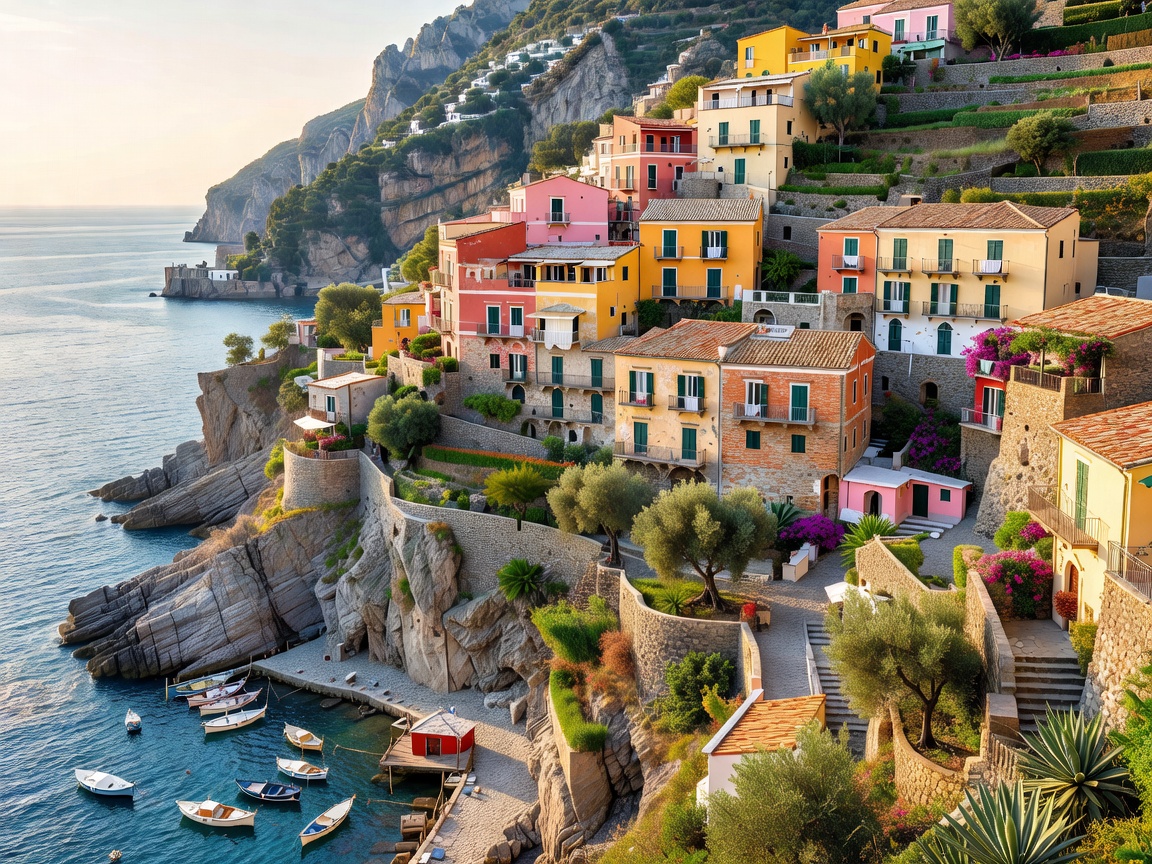
The Amalfi Coast is a narrow strip of southern Italy where the Lattari Mountains fall directly into the Tyrrhenian Sea. Amalfi, Positano and Ravello are the headline names, but the pleasure is often in the transitions: a bus rounding a sudden viewpoint, a stairway leading to a tiny swimming cove, or a lemon granita eaten above terraced gardens. It is intensely scenic rather than conventionally easy.
Positano has the most recognisable vertical drama and the largest choice of restaurants, but it is also the most expensive and crowded. Amalfi is more practical for ferries and has a useful bus connection inland. Ravello sits high above the water, trading beach access for gardens, music and long views. For a quieter base, consider Minori, Maiori or the fishing village of Cetara.
Beaches and swimming
These are mostly pebble beaches, platforms and lidos rather than broad expanses of sand. Marina Grande in Positano is lively and convenient; Fornillo is calmer and reachable on foot. Atrani’s small beach sits beside a handsome piazza, while Maiori offers one of the coast’s longest sandy stretches. Paid lidos commonly charge about €20–€45 for two loungers and an umbrella in peak season; public sections are free but fill early.
Getting around
Arrive via Naples, then use the airport bus or train to Sorrento and continue by ferry or bus. Ferries are scenic and avoid road traffic, though they generally run from April to October and can be cancelled in rough weather. SITA buses are inexpensive, often €2–€5 per journey, but queues and delays are normal. Hiring a car is rarely relaxing: roads are narrow, parking is scarce and restricted zones are enforced. A private transfer is worthwhile for luggage, while walking is best within each village.
Costs, trade-offs and a sensible plan
A mid-range day for two can reach €180–€300 before accommodation, including a casual lunch, transport and one paid beach setup. Prices fall noticeably in May and October. Book accommodation near a bus stop or ferry landing, and reserve dinner if you want a terrace. Wear shoes with grip: the famous Path of the Gods is beautiful but exposed, with uneven steps and little shade. Carry water and check local conditions before starting.
The coast’s main weakness is pressure. July and August bring heat, traffic and cruise-day crowds. Its strength is that a carefully timed trip still feels cinematic: swim before breakfast, visit Ravello in late afternoon, and leave whole hours unplanned for the view.